
How Healthy Is Vietnamese Food?


Vietnamese food has a reputation for being fresh and balanced, but how healthy is Vietnamese food really? The answer depends on the dish. The cuisine includes everything from broth-based soups with fresh herbs to deep-fried spring rolls and rice plates with rich sauces. Rather than labeling Vietnamese food as healthy or unhealthy overall, it helps to look at what goes into each dish - the protein, the cooking method, the vegetables - and decide what fits your preferences.
What Can Make Vietnamese Food a Balanced Choice?
Several elements commonly found in Vietnamese cooking can contribute to a balanced meal. Many dishes combine a protein - beef, chicken, shrimp, or tofu - with rice noodles or steamed rice, alongside fresh vegetables and herbs like coriander, mint, cucumber, bean sprouts, and red cabbage.
Broth is another defining feature. At Ha Noi 1988, a Vietnamese restaurant in central Paris, the phở menu is built around a beef bone broth cooked for 24 hours and a separate 8-hour vegetable broth for the plant-based option. These broths serve as the base for noodle soups rather than cream- or cheese-based sauces.
Not every Vietnamese dish follows this pattern, though. Some involve deep-frying, stir-frying with oil, or sauces whose composition varies by recipe. Whether a meal leans lighter or richer depends on what you order.
how Healthy is Vietnamese food? Dishes to Consider
Here are five dishes from the Ha Noi 1988 menu that illustrate the range of ingredients and preparation methods in Vietnamese cooking, described based on what the restaurant lists.
Goi Cuon / Fresh Spring Rolls - €8.80

These fresh spring rolls are available with stir-fried beef, steamed shrimp, or stir-fried tofu, wrapped with salad in rice paper. Unlike fried spring rolls (nem), gỏi cuốn are not deep-fried - the rice paper is served as-is, so the wrapper does not involve added cooking oil. They are typically served with a dipping sauce.
Pho Tai - €14.80

One of the most recognizable Vietnamese dishes, phở at Ha Noi 1988 is made with housemade fresh rice noodles and a 24-hour beef bone broth, topped with rare beef and served with fresh herbs on the side. The broth is the central component of the dish.
Salade Xoài / Mango Salad - €9.80
Available with steamed shrimp or fried tofu, this salad focuses on raw and lightly prepared ingredients with mango as the main fruit component. Among the dishes listed here, this one leans most toward fresh, uncooked ingredients - though the tofu version does use fried tofu.
Bò Bún - €17.80

Bò bún is part of a broader family of Vietnamese rice noodle bowls. This version features stir-fried beef over fresh bún with salad, mango, red cabbage, bean sprouts, coriander, mint, cucumber, peanuts, fried shallots, and a housemade sweet-sour sauce. It also includes two deep-fried chicken spring rolls (nem), meaning the dish combines both fresh, uncooked components and fried elements in the same bowl.
Pho Chay - €16.80
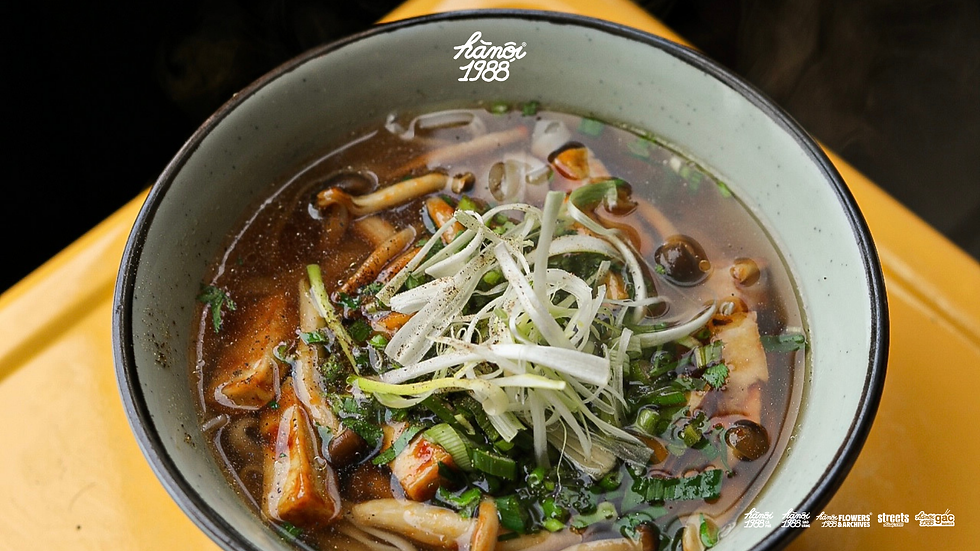
For a plant-based option, phở chay uses an 8-hour vegetable broth with stir-fried mushrooms and fried tofu. The protein comes from tofu and mushrooms rather than meat. Note that the tofu is fried (chiên), so the dish is not entirely oil-free despite being vegetarian.
What Should You Watch Out For?
Preparation methods vary widely across Vietnamese dishes. Deep-fried spring rolls (nem), fried shallots, and fried tofu all add oil. Dipping sauces and housemade sauces contribute flavor, but their exact ingredients - including sugar, fish sauce, and oil - can differ by recipe.
Portion size also matters - a bowl of pho, a plate of bo bun, and a serving of com each come with different volumes of noodles, rice, or broth. Each dish has its own profile based on its ingredients and cooking method.
How to Choose a Vietnamese Meal in Paris
When choosing a Vietnamese meal, looking at the actual ingredients on the menu is more helpful than relying on assumptions about the cuisine. Consider whether the dish is broth-based, fresh-wrapped, or fried, and whether it features raw herbs or primarily starch and sauce.
Ha Noi 1988 has multiple locations across central Paris - near Notre-Dame, on Île Saint-Louis, in Le Marais, and in the Latin Quarter - and lists ingredients on the menu so you can compare before ordering. For broth, the phở menu offers several variations. For more raw vegetables, try the mango salad or gỏi cuốn. For a plant-based meal, phở chay or bún chay (€17.80) provide tofu and mushrooms as the protein source. Browse the full menu online or reserve a table to try for yourself.
Frequently Asked Questions
Is Vietnamese food generally healthy?
There is no single answer. Vietnamese cuisine includes dishes with fresh vegetables, herbs, and broth, but also dishes involving deep-frying or rich sauces. Whether a dish fits your dietary preferences depends on its ingredients and preparation.
What are some healthy Vietnamese food options?
Dishes featuring fresh vegetables, herbs, and broth - such as phở or gỏi cuốn - contain more uncooked or lightly prepared ingredients. The overall profile still depends on all components, including sauces and fried elements.
Is pho a healthy meal?
Pho is a broth-based soup with rice noodles and a protein topping. At Ha Noi 1988, the broth is simmered from beef bones for 24 hours and the noodles are housemade daily. Whether it aligns with your goals depends on factors like sodium content and portion size, which are not listed on the menu.
How can I choose a balanced Vietnamese meal?
Consider the protein source, whether vegetables are raw or cooked, the cooking method (steamed, stir-fried, or deep-fried), and what sauces or toppings are included. Comparing a few dishes on the menu before ordering can help you find something that matches your preferences.


Comments