
Vietnamese Food Paris: A Guide to the Dishes Beyond Pho Bo
- Luu Quynh Anh
- Jun 8
- 4 min read

When people search for Vietnamese food in Paris, pho bo is often the first dish that comes to mind. It is familiar, comforting, and often the first dish ordered at a Vietnamese restaurant.
But Vietnamese cuisine goes far beyond a single bowl of noodles. From banh mi chao to bo bun (bún bò), Paris offers far more to explore. This guide looks beyond pho bo to the dishes worth trying and where to experience authentic Vietnamese food in Paris.

Pho: The Dish That Needs No Introduction
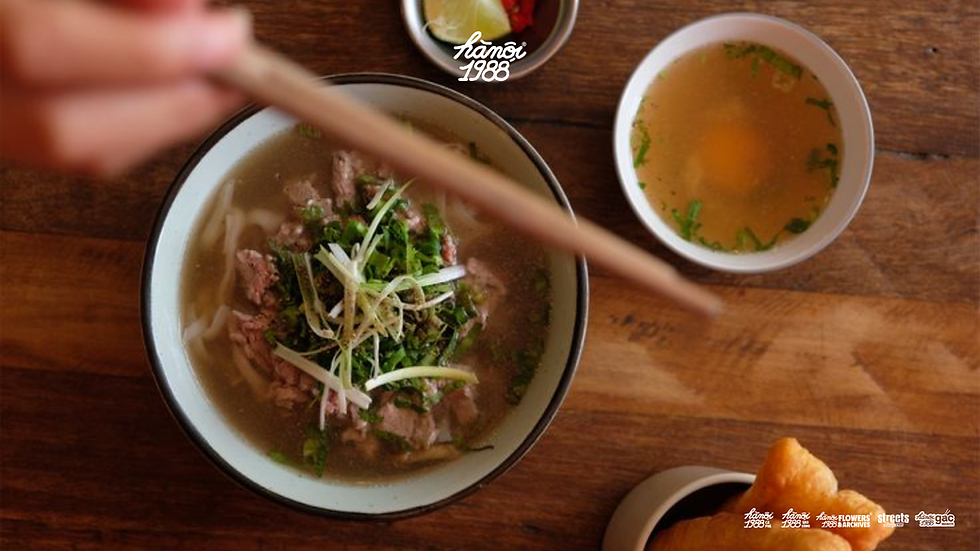
Pho is a slow-cooked broth served over fresh rice noodles, with slices of beef or chicken and a plate of herbs, sprouts, and condiments on the side. The broth is what separates a great bowl from a forgettable one: a proper northern-style pho broth simmers beef bones for upward of 24 hours, drawing out collagen and marrow until it reaches a clarity and depth that is impossible to shortcut. Southern Vietnamese pho tends to be sweeter and richer; northern pho, particularly the Hanoi style, is more restrained and savoury, with the fragrance of star anise and charred ginger doing quiet work in the background.
One detail that many diners overlook: chicken pho and beef pho should use entirely separate stocks. Restaurants that maintain this distinction, cooking chicken bones independently rather than using the beef broth as a base for everything, produce a chicken pho with a genuinely different character, cleaner and more delicate in a way that makes it worth ordering on its own terms rather than as an afterthought.
Bo Sot Vang: TWO WAYS Vietnamese Beef Stew
Bo Sot Vang (beef stew) is a Vietnamese beef dish that traces its origins to the culinary exchanges between Vietnam and China, absorbing techniques and flavourings that Vietnamese cooks then made entirely their own. The preparation begins with beef simmered slowly in a broth built on star anise, cinnamon, and ginger, then deepened with Vietnamese herbs and tomatoes until the spices and the meat reach a quiet equilibrium. The result is a stew with considerable aromatic complexity, warm and savoury in a way that feels both deeply familiar and distinctly Vietnamese.
At Hanoi 1988, the dish appears in two formats that are both worth knowing. Pho bo sot vang brings the braised beef into a bowl of pho broth over rice noodles, so the spiced cooking juices from the stew dissolve into the broth and add a second layer of depth to an already complex soup. The second format pairs the same stew with banh mi, served in a cast-iron pan, a combination that is simultaneously practical and deeply satisfying.

Banh Mi Chao - Another Version of Vietnamese Famous Banh Mi
Bánh mì reflects the meeting of French and Vietnamese food culture - the French baguette was adapted in Vietnam into a lighter, crispier bread, filled with pâté, pickled vegetables, fresh herbs, chilli, and savoury meats. The result is one of Vietnam’s most iconic street foods - a sandwich unlike any other.
The Banh Mi Chao is a warm Vietnamese variation of banh mi, served not in hand but in a hot cast-iron skillet, transforming a familiar street food into a full sit-down experience. The heat of the pan keeps every element hot and the presentation makes clear that this is not a sandwich eaten on the go but a dish that rewards attention. For anyone who thinks they already know what banh mi is, the Banh Mi Chao offers a convincing second opinion.

Bo Bun: Paris's Best-Kept Vietnamese Secret
If pho is the dish most people know, bo bun (bún bò) is the dish most people leave Paris wishing they had ordered sooner. This is a cold rice vermicelli dish layered with stir-fried beef, fresh vegetables, aromatic herbs, roasted peanuts, fried shallots, and a homemade sauce built on fish sauce, lime, sugar, and chilli.
The dish arrives unassembled, and mixing it is part of the experience. The sauce goes in first, then everything turns from the bottom up until the pale vermicelli takes on colour and fragrance.

Fresh Spring Rolls and the Art of the Nem
Vietnamese spring rolls divide into two distinct categories that are worth keeping straight.
Nem ran, or fried spring rolls, are wrapped in a thin rice paper that blisters and crisps in hot oil, encasing a filling of minced pork, glass noodles, wood ear mushroom, carrot, and bean sprouts. They arrive at the table hot, with a dipping sauce on the side, and they are best eaten immediately while the shell still shatters at the bite.
Goi cuon, the fresh roll, works on entirely different principles. Rice paper is softened briefly in water, then wrapped tightly around cooked shrimp or pork, rice vermicelli, lettuce, and herbs. Fresh rolls are served at room temperature and depend entirely on the quality of the dipping sauce to bring the filling into focus.

Both versions appear as starters across Vietnamese menus in Paris, and ordering one of each at the beginning of a meal is a reasonable way to understand the full range of what Vietnamese cooking can do with a single sheet of rice paper.
Where to Experience Vietnamese Food in Paris
Hanoi 1988 serves northern Vietnamese cuisine across four addresses in central Paris, each with its own character. The original restaurant at 72 Quai des Orfèvres, steps from Notre-Dame on the Île de la Cité, offers the broadest introduction to the kitchen's range: pho, bo bun, banh mi, spring rolls, and a menu that moves through Vietnamese cuisine with enough depth to reward more than one visit.
Hanoi 1988 Sao Vàng at 16 Rue le Regrattier on Île Saint-Louis is where the kitchen's craft is most concentrated. The interior takes its aesthetic from the neighbourhood shops of 1980s Hanoi, and the menu includes the Pho Bo Sot Vang, the only version of this colonial-era dish available in central Paris. The restaurant produces its rice noodles fresh daily, maintains separate chicken and beef stocks, and simmers its beef broth for twenty-four hours. These are choices that are invisible on the menu and immediately apparent in the bowl.

Vietnamese food in Paris is best experienced in person. Hanoi 1988 serves northern Vietnamese cuisine across 2 addresses in central Paris, from the flagship on Quai des Orfèvres to the intimate Sao Vàng on Île Saint-Louis. Explore the full menu and reserve your table at viet-eat.com.



Comments